I went to a rehearsal for a Betsy Ross & Friends; History as it Never Happened! rehearsal at the Methodist church at 1600 Orange Ave, Winter Park, FL. I was invited to the rehearsal by Candy Dawson, a member of the cast. This was a fun original production written by members of the cast. If you don’t know, Betsy Ross was the woman who sewed the first American Flag. With that historical background, it was clear that this would be a patriotic production mixed with pop cultural references that would ring true with the Baby Boom generation. I am a baby boomer so it hit my funny bone hard.
As with many rehearsals, it felt like the director and stage manager were not entirely sure that all the pieces could fall in place in time for opening night. There is a certain magic that happens on opening night where any doubts disappear and the production happens without a glitch. Of course all in the cast are award of the subtle details that most members of an audience are oblivious to.
When I got to the church the doors were locked but luckily a father who was dropping off a child for the church school let me in and I happened across the church auditorium. All the actors were in the back of the auditorium getting set up with microphones and making sure make up and costumes looked good.
One skit involved Whistler’s mother and I was told the actress was well over 80 years old. She was a fire cracker and held her own acting in the part. Though Betsy Ross acted as the host for the variety show each act was unique and hilarious. Being a small community production, everyone was excited but also relaxed since the stakes were not too high. Everyone just had fun and it showed.
Candy Dawson was playing the part of Lucille Ball and at first sight she clearly fit the part. She was getting help with her hair as she welcomed me to the rehearsal. Candy was also the author of one of the bits in the show and I was impressed.
The rehearsal was a good run through of the show with only a few pauses. Everyone seemed well rehearsed and they all knew their lines. It was great to sketch the rehearsal, but it would have been nice to see how the jokes landed with a live audience. I have no doubt that the auditorium was alight with laughter during the shows run.
 Brooklyn’s Pizzeria and Italian Restaurant (27405 US Highway 27, Leesburg, Florida) has to be the most sketched Pizza joints in Lake County Florida. When my food supply would run out I would head out one night to Brooklyn Pizza for some spaghetti or a small pizza pie. Both options offered comfort food before my next grocery run.
 I stayed at a really nice Air B&B in Thornton Park while I was looking for an apartment to rent. It was in the top floor of a 3 story building with a balcony that overlooked Washington Street. There was a bar next door with a UCF banner and I liked hearing all the conversations.
 I went to the Dr. Phillips Center for the Performing Arts to sketch and Art and Autism event which was to be held on the 2nd floor Tupperware Brands Hospitality Suites. I never did find the suites but I did find this huge ballroom tiger overlooking the Dr. Phillips lobby.
 Ligature Coffee (419 E Michigan St #4, Orlando, FL) was the site of an Urban Sketcher’s Orlando Coffee and Draw outing. Just short of a dozen sketchers enjoyed some coffee, sketching and conversation. Instead of drawing the coffee shop, I simply drew the sketchers. The blue touches of color from the coffee mugs played throughout the scene. The parking lot right in front of the shop negated any pastoral views while sipping the brew.
 On April 7, 2026 I went to City Arts Factory to sketch. Johanna Lung who was performing on the little stage set up in the ground floor café. Coffee, wine and beer can be found at the bar. I was staying at a Thornton Park Air B&B but would have to find a new one for the following week. I wanted to be settled for when Fringe was set up in May so I planned to find an extended stay.
 On May 30, I went to the ICE Offices (9495 Delegates Drive Orlando Florida) to sketch the Anything but ICE Job Fair. I did a drive by and found a few people gathered outside the heavily fortified warehouse facility. Finding parking was a challenge but I found what looked like legal parking on a side street nearby. I had a thought that officers would most certainly be scouting around the area looking for any infraction to ticket protestors.
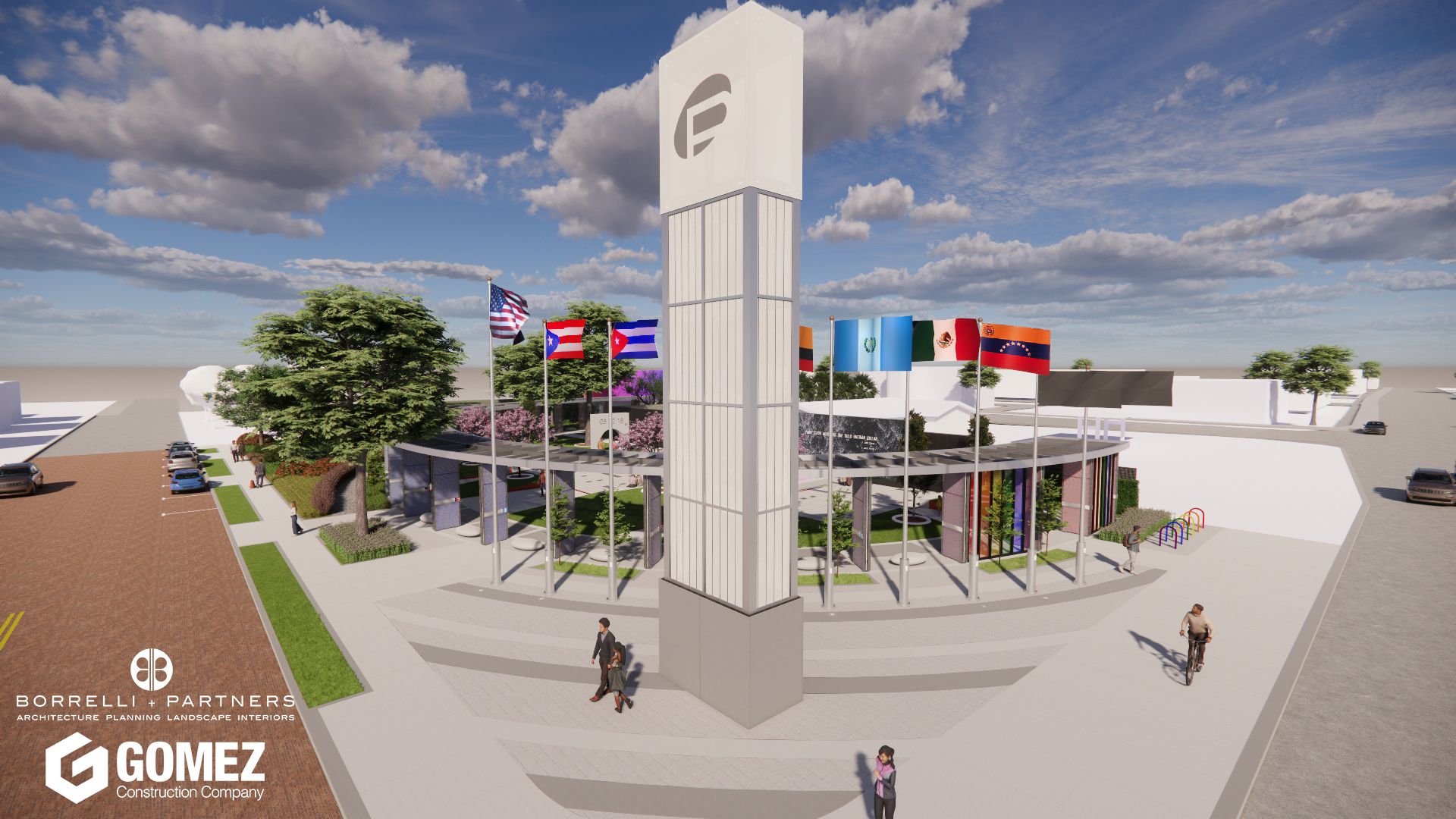
 I went to the Orlando City Hall to witness the Orlando City Council Meeting which would fund the building of a Pulse memorial at the former site of the Pulse Nightclub at 1912 South Orange Avenue Orlando Florida. On June 12, 2016, a gunman entered the club and murdered 49 people and injured 58 others who were out for the night to celebrate and dance.
 I had already done 2 sketches of the Lake Eola Farmer’s Market but it still was not time to check into my Air B&B in Thornton Park. I had no choice but to do another sketch. I heard a musician, and walked towards the sound of music. This portable stage had been set up by the City of Orlando on the Lake Eola south east lawn. A musician was performing with no audience. By the time I got the sketchbook out and had blocked in the stage, the musician left. I shifted my focus to the family eating at the picnic table in the foreground. A mom sat down on the grass with her stroller.