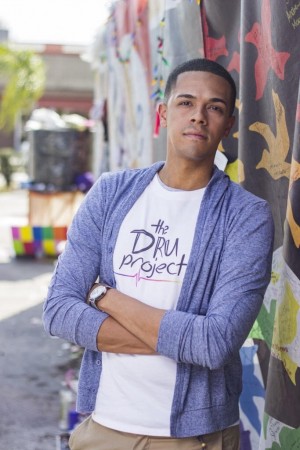
The History Center’s One Orlando Collection

Pam Schwartz the Director or the Orange County Regional History Center and Jeremy  Hileman who is in charge of the One Orlando Collection gave a Lunch and Learn talk about the collection that was build after the Pulse Nightclub shooting.

The shooting happened at about 2AM on June 12, 2016 killing 49 people at the Pulse Nightclub, and injuring about 68 others. The survivors have to live with the horrific memories.

The History Center has to decide what their roll would be in the community following the massacre. Pam immediately drafted a 5 page collection plan. Within a week, the museum became the collection entity following the tragedy.

Six years later, the collection is still growing. It has some 12,000 plus objects, oral histories, and terabits of video and photography. Some of the items predate the tragedy some are of the tragic event itself and some are of the love and support that followed and spread worldwide.

Many of the items in the collection are from the spontaneous memorials that cropped up following the shooting. People place items to try and replace the loss by giving. They don’t think what may eventually become of what was left behind. The History Center didn’t want to have that love and support just go away. There was no manual on how collect following a tragedy. The History Center collected for 32 days straight.

White crosses were donated by Greg Zanis, a midwestern carpenter, (now deceased) who brought crosses to a number of sites of mass tragedy. Memorial items were left on and around the crosses. The crosses were saved and put in special storage boxes and the items left behind were stored in a box for that individual whose name was on the cross. The Orange County Regional History Center will host the Pulse memorial crosses from Friday, June 10, 2022 through Sunday, June 12, 2022 in honor of the 49 and all others impacted. Hours will be 10 a.m. to 5 p.m. on Friday and Saturday and noon to 5 p.m. on Sunday.


Assassins

Cheyenne Saloon and Opera House in downtown Orlando will host a production of  Assassins, which is a musical with music and lyrics by Stephen Sondheim and a book by John Weidman, based on an original concept by Charles Gilbert Jr.

Staged by the Florida Theatrical Association, and directed by Kenny Howard, the production makes amazing use of this historic venue which will soon faces it’s own assassination by developers who want it demolished for a condo sky rise, since what Orlando needs is more high rent shoe boxes.

Assassins lays bare the lives of nine individuals who assassinated or tried to assassinate the President of the United States, in a one-act historical musical that explores the dark side of the American experience. From John Wilkes Booth to Lee Harvey Oswald, writers Stephen Sondheim and John Weidman bend the rules of time and space, taking us on a nightmarish roller coaster ride in which assassins and would-be assassins from different historical periods meet, interact and inspire each other to harrowing acts in the name of the American Dream.

When Pam and I arrived, I knew I wanted to sketch the production as if viewed from Lincoln’s Presidential booth at the Ford Theater. Unfortunately the Saloon’s first level balcony was to be used by actors who appeared with blood red spot lights illuminating them from below during the show. There was another balcony above that but the sight lines made it impossible to see the stage. We finally climbed to the highest levels, having to walk through the actors green room to get there. From this vantage point, the technicians and stage director took center stage, while the performers worked on the distant stage. On the balcony above the stage a band performed. Unfortunately the acoustics were not stellar from where we sat, but we both knew the play and could follow along. I should note that even from our nose bleed level I could tell the performer for  John Wilkes boot has some major singing chops.

I tend to feel a bit uncomfortable with performers holding guns. Of course actor Alec Baldwin thought his gun held blanks when he shot his cinematographer, Halyna Hutchins dead. A lawyer for Alec Baldwin said on April 21. 2022 that an investigation by New Mexico has cleared his client of wrongdoing in the fatal shooting on the set of “Rust.” Halyna’s life was found to be worth only $137,000, which is how much New Mexico fined the Rust production.  Orlando is is also where a gunman entered the Pulse Nightclub and murdered 49 people and injuring 53 others. From as far away as we were, I could not make out if the weapons were historically accurate. The gun’s sound effects were at least played down, being unrealistic slaps.

Assassins will run April 22, 2022  to May 1, 2022 at the Cheyenne Saloon on Church Street. Tickets are available now through Eventbrite. Tickets range from $22 to $100 for VIP seating.

After Pulse: Catholic Charities

Gary Testor executive director of the Catholic Chrities of Central Florida, went to mass the morning after the Pulse Nightclub shooting. He head that there had been a shooting but the information was sketchy at the time. At about 10:15AM he got a text message from the chancellor of the dioceses, Carol Brinati, that Deacon David Grey was going to call. The call came at about 11am. David was at the Hampton Inn with other clergy. He needed counselors. Ten minutes later he called back and had realized that there was a need for Spanish speaking professionals.

It was chaotic at the Hampton inn and translators were needed. Gary called Debbie Cruz to arrange to get translators on site by 1pm.

Joel Stinera,was called by Debbie and then Rosa. He drove down to the Orlando Regional Medical Center (ORMC) and arrived about 2 or 3pm. Family were waiting for news about their loved ones who may have been shot. It was crowded and disorganized. The experience was overwhelming and sad. He tried to comfort the family’s and friends of the victims.  Someone stood at a podium and started reading the names of the people at the hospital. After the list was read they said, “Well, if your family member wasn’t mentioned, they didn’t make it.” This was all in English. Many did not understand. Family cried. When family actually got news the chaos got worse. That experience marked him for life.

Julio Rivera saw the news on Facebook. His family began to call checking to see if he was OK. He flipped on the TV and couldn’t believe what he saw. Debbie Cruz contacted him and asked him to get downtown as well. People met at the Catholic Charities office and they went together to the Hampton Inn Hotel. They entered through the back door of the hotel. There was no security. They walked a long hallway with people crying, yelling and laying on the floor. He recognized some people, including former clients and talked to them. A doctor of director from hospital announced the names. The victims were in two different hospitals. The first names were people who were in stable but critical condition. Every announcement was in English. No one was translating. Julio tried to shout his translations over the chaos.

The second round was names of people at ORMC, in critical condition. People were advised to talk to a representative, but again this as all in English. People shouted, “Shut up we can not hear!” If a name was not announced then they did not have information about that person or they are deceased. When the translator announced that true chaos broke out. There was screaming crying and people hitting the walls. There was a lady on the floor and he gave her a bottle of water and tried to comfort her. The chief or police got u to the podium and said he understood the situation. He asked for time because they were still investigating. By that time no one was listening. It isn’t what you say, but how you say it and there was no compassion in the announcements. People who heard their loved ones names left for the hospitals. Everyone else stayed and waited. There was some media inside taking pictures. Julio stayed until about 7:30pm.

After Pulse: David Thomas Moran

Advisory: Please note that this post is about the Pulse nightclub massacre on June 12, 2016. It contains sensitive and difficult to read content. Post written with narrator’s consent.

David Thomas Moran co-founded Gays Against Guns in the aftermath of the Pulse nightclub shooting. He participated in a sit-in for the 49 lives lost and was arrested.

David first became an activist in college. The Pulse hate crime and Donald Trump’s election made the stakes higher than ever for him. He feels marginalized people are being scapegoated and targeted for everything.

The day before the shooting at Pulse, a friend had returned to Orlando. He picked his friend up from the airport and his friend wanted to go out that Friday before the shooting, but David was tired and so stayed home. His friend went out and saw Drew Leinonen and Juan Guerrero at Southern Nights, another club in Orlando. That was the same night Christina Grimmie was murdered at the Plaza Live.

Saturday morning, David walked to Plaza Live to pay his respects to her. That night he had to work at the restaurant again. After work, he asked his friend if he wanted to go out to Southern Nights or Pulse. However their car battery kept dying. They struggled in the parking lot to jump the battery and by the time they got a charge they decided they were done for the night. They went home.

David didn’t sleep well that night. He noticed some vibrating. He got a text message that said, “there has been a mass shooting at Pulse.” What? He went to CNN and the top story was the shooting. It did not make sense. At the time the news said that 20 people had been killed. Searching Facebook he found a post from Brandon Wolf that said, “Eric and I were there, we got out.” If they were there then other friends might have been there. Drew might have been there. Are they OK? he started to message friends. He had already texted his family to let them know he was OK. When he reached Brandon Wolf he was told, “We got out but Juan has been shot and we don’t know where Drew is.” A friend sent a link to a news clip and it was of Drew’s mother. She was at the hospital trying to figure out where he was. David froze.

Drew Leinonen and Juan Guerrero had planned to have a pool party on June 12, 2016 and they had invited David. He was considering going. The whole day he kept thinking, this is just supposed to be a pool party. The news announced that Juan was one of the first three who was confirmed dead. Juan and Drew’s pictures were being plastered all over the media.

David decided to walk to The Center and he got there around 9AM, then spent the whole day there. He posted updates and let people know where they could donate blood. He managed several Facebook pages that addressed peoples’ needs. At the Center, everyone stood and listened as President Obama came on the TV. He said it was an act of hate and terror. Moran felt some were calling it a terrorist attack to justify militarizing the police and anti-immigrant legislation, all of which he feels does not honor the lived experiences of the people who were victimized by this act of violence.

He left the Center and biked to Ember. He had originally met Drew at Ember. It was hard. Everyone was crying and grieving. There was a candle light vigil. We still didn’t know at that point who had been lost. Nothing was 100% confirmed. David went to Drew’s wake and funeral.

Much later, after the Dallas police shootings, Ida Eskamani contacted him and told him there was going to be a sit-in on gun safety reforms. They wanted to address intersectional concerns around racism, wage inequality, anti-immigrant sentiment, and Islamophobia.  Though he had worked with OPD through Bike Walk Central Florida, and had a good experience with that, he was hesitant to participate in this sit-in. He got to the sit-in just in time to walk in with protestors at 10AM. When he was arrested, he only had the red hat and a red heart in his pocket that you see in the sketch above. He had nothing else. That experience made him aware of the solidarity awareness movement coalition in Orlando. Various organizations sat in solidarity. After most people left, he stayed behind to sit-in with Ida. The sit-in made him realize that he had the power to save himself. The sit-in was largely about politician Marco Rubio‘s inaction. Rubio was confronted by David the next week. The Pulse shooting targeted people he did nothing to help. He used their oppression as an excuse to run for office again. He did nothing for gun safety laws, he did nothing for LGBTQ+ equality, and did nothing to alleviate the oppression of workers across the state.  Rubio was the epitome of the exploitation of the Pulse hate crime. People saw that confrontation. The Advocate dropped the story and it received a lot of coverage. That is when Gays Against Guns reached out to David about starting an Orlando Chapter.

My Portraits of Pulse

The Orlando Gay Chorus and J.D. Casto presented My Portraits of Pulse in front of the Dr. Phillips Center for the Performing Arts (445 S Magnolia Ave, Orlando, FL)) on June 8, 2021.

The lawn in front  of the Center which was once covered in flowers and memorial items left behind after the massacre of 49 people  at Pulse Nightclub on June 12, 2016. The lawn is now covered with metal staging areas meant to promote social distancing for outdoor concerts and screenings. Food and drinks can be ordered by scanning a bar code and the orders are delivered to each table which avoids crowded lines at the concessions stand.

Three large screens were set up to project photos taken by J.D.Casto a local photographer. J.D. stood on stage talking about his perspective of what happened in Orlando following the shooting. That day he checked to be sure his camera batteries were charged and immediately went to The Center which became mission central for community outreach and a donations. In the Center a crowd was gathered watching TV and they all heard the official number of people who had died for the first time. Shock swept through the room. Photos taken that first day were largely of grief and sorrow.

National and international media flooded into Orlando and J.D. suddenly found himself shooting photos along side some of the best photographers in the world. His view of his self worth wasn’t that elevated, but he couldn’t stop taking photos and sharing them. The images captured slowly changed because along side all of the pain and grief, he saw a community filled with love. Many of his photos were used for a photo wall that is now part of the temporary memorial at Pulse. After each segment of his story, the chorus would stand and sing to a photo montage projected on the screens. The idea of telling the story of what happened after Pulse through the lens of one individual seems rather limiting, but the stories of thousands are also impossible to tell all at once.


Pastor Vallo

Advisory: Please note that this post is about the Pulse Nightclub Massacre on June 12, 2016. It may contain sensitive and difficult to read content. Post written with narrator’s consent.  

Pastor Paul Vallo‘s Christ Unity Church, provided immediate response to first responders in the aftermath of the Pulse Nightclub shooting for 11 days in June of 2016.

The church was outgrowing the property they had on Orange Avenue but, when the pulse attack took place and the congregation at Christ Unity had the chance to respond, they felt like it crystalized the reason why they were there. They had a unique ability to respond to a need in the community. The church has always been about community outreach.

On the morning of June 12, 2016, Pastor Vallo was contacted and told that there was a shooting at Pulse but no one knew the extent of the incident. The Pastor, staff and volunteers arrive very early in the morning to the church. Many had trouble getting to the church since the church was behind police lines. Many had to walk on foot to try and get past police lines. There clearly was no way that there could be services that day.

Staff and volunteers gathered, and prayed for the victims. Immediately after prayers they went to the front doors and watched all the first responders who were walking up and down the sweltering street. The church has a cafe, so they took all the food and supplies and they put it out on the street. They stood outside and told people passing by that they should let people know that they had food at the church.  Volunteers worked to get more food and water to the church. The evening of the attack the church held a prayer vigil. The sanctuary was full. For the next 11 days they served first responders around the clock. A christian church needs to show compassion.

The media wasn’t allowed to come in. They wanted the church to be a sanctuary. It was a place where first responders could decompress, get out of the heat, get some good food. Restaurants began to respond and people donated amazing home cooked meals. They had enough to feed hundreds of people.

On woman from Orlando Police Department said she hadn’t slept or eaten anywhere for four days except in the church. Some people did not go to the prayer vigil because they feared the area might not be safe, but the pastor never felt fear. He sensed the anxiety, but they were behind police lines for a week and a half.  The Florida Governor Rick Scott conduced much of his work from inside the church.

Pastor Vallo was interviewed by BBC and CNN. Most of his efforts were focused on meeting the needs of first responders. At a vigil at SODO development next to the church, some people were asking, how do we make sense of this? He responded, You can’t make sense of a mad man. There is no reason, there is no logic. The only thing that could be done was to respond to it, rather than try and figure it out. We can not become the children of the shooter’s hatred. We have to respond with the opposite, with love, kindness and compassion.

A man who lives directly behind the Pulse Nightclub, had not left his home for four days after the shooting. He was having a panic attack in the yard. On the evening of the shooting it was like being in a war zone. Through the blinds he saw people running through the yard screaming covered in blood. Many people on the street hadn’t left their houses. They still were not sure what was going on outside. For weeks afterwards the pastor and others began going door to door doing wellness checks. If people needed medicine or food they helped find the resources. Some had no other need other than to talk about it.

Community: 5 Years After the Pulse Tragedy

COMMUNITY: 5 Years After the Pulse Tragedy is on exhibit May 29 to August 15, 2021, at the Orange County Regional History Center (65 E. Central Blvd.
Orlando, Florida 32801.)

The Pulse nightclub shooting in June 2016 and the subsequent response forever changed Orlando – exemplified by the immense outpouring of support and love shown by locals in the days, months, and years that followed. However, the impact of the tragedy was not limited to the physical boundaries of Central Florida.

The History Center’s 2021 remembrance exhibition, examines how communities of all kinds were touched both locally and across the globe. Visitors will follow the story of Pulse nightclub, from its earliest conception through 2016, as well as the response to the devastating event and the lasting impact in the time since. Through the telling of this important part of our collective history, the museum seeks to celebrate the spirit of community and honor the 49 victims and all of those affected.

To ensure that this exhibition is accessible to the entire community, the History Center will offer free admission June 5 -13, 2021. The white memorial crosses will be available for viewing June 11-13, 2021. The exhibit was partly sponsored by The Contigo Fund.

On June 4, 2021 there will be a Lunch & Learn program at the museum: Pulse: Looking Back Over the Past Five Years. This is a free program through the Zoom platform. You can register and learn more online.

Former Orange County Mayor Theresa Jacobs

Advisory: Please note that this post is about the Pulse Nightclub Massacre on June 12, 2016. It contains sensitive and difficult to read content. Post written with narrator’s consent.  

Former Orange County Mayor Theresa Jacobs knew nothing of the Pulse Nightclub before June 12, 2016. She had driven past many times, but didn’t know it was a nightclub.

The events that unfolded in the 24 your after the mass shooting that took the lives of 49 Orlando citizens. The morning of the shooting her primary thought was, “This can not be happening.” Her husband woke her up. There was a sense of urgency. The next moment she was on the phone with a sheriff’s deputy.  It might have been abut 5AM. Her next thoughts were how quickly can I get out the door and what do we need to do. There is some comfort in being able to do something.

It was so unbelievable that something that horrible could happen. She remember when the numbers jumped from 20 to close to 50.

Parking was a nightmare as she and an officer looked for the command center. Walking down the street she saw a bloody tennis shoe. Her heart sank. The intellectual part of her shut down any feelings and she got to work. The Orange County safety director was on site. He is also an emergency room physician at Orlando Regional Medical Center. He wasn’t on duty the night of the shooting but he was with her on the ground.  Initially one of the concerns was, are there still people inside who might have a pulse and can still be rescued.  The building was not secure, there was talk of bombs. Her primary job was to inform the public. There was an unfolding trauma throughout the community and throughout the nation.

The next step in the process was to try and connect family members with survivors. They estimated it might take 5 to 7 days to go through the autopsies. Family members did not know for certain the status of their loved ones. One survivor was in the hospital in a coma. He did not have ID on him. Over the next two days they tried to determine who he was and how to contact his family.

She walked out to brief the media with Chief Mina. There were so many cameras. People were sitting on the street. When Mina announced the numbers people couldn’t believe it. Someone shouted out “15”. They had misheard him assuming it had to be 15 since the numbers prior had been 20. No one could comprehend the number.

Ivonne Galanes

Ivonne Galanes grew up in Puerto Rico and always wanted to be an artist.  She attended Pratt Institute in NYC. She loved the museums in NYC, the Frick Collection, MOMA, the met. You had to take two days to see the Met. Every chance she got she would take a subway and go to the Met. At Pratt she studied anatomy. A class went tot he Columbia School of Medicine. One cadaver had all the skin stripped off  so you could see all the muscles. The body was from a Hollywood actor from a Hercules movie. She studied at Pratt for two years and went back to Puerto Rico after getting sick. The school shut off the heat in the winter to save money. Years alter she went to an atelier in San Juan and she was always painting.

Her father was an art director and she followed in his footsteps. After college her day job was always in an advertising agency. She would paint at night and weekends. She made a name for herself. She started as a graphic designer. This was before computers. You had to know how to draw. Her father taught her since she was a little girl. Her training started way before college. She could sketch up an idea during the course of a meeting with clients.

Ivonne loves science. Her feet might be on the ground but her head is in the stars. That is where the creative ideas come from. Early in her career colors in her painting were dark but after she got divorced the colors became more vibrant.

She had a friend who was at Pulse Nightclub on the night of the shooting that killed 49 and he was one of the survivors. She did a painting called Angel of Healing. The wings were a rainbow of colors. The angel had his hand on his heart. The friend who survived fell in love with the painting and he bought it. Ideas for paintings are in the air and she just grabs them. If she tries to sit down and think about an idea it will not happen. It is random. She picks up the signal.


Pulse: Don Price

Don Price was the sexton at Greenwood Cemetery at the time of the Pulse Nightclub massacre. He got a call from the mayors office the weekend of the shooting. He had been out at the beach watching a Space X launch. He returned to met with the mayors office. The mayor wanted to know if Greenwood could handle the 50 burials. The mayor also wanted to see the area of the cemetery that could accommodate the families on about Sunday afternoon. It was announced that the families would not have any cost of burial at Greenwood. People thought that meant the burials were free, but there were costs. Several anonymous law firms underwrote the burials paying families for the plots. 50 spaces were set aside. The section that was set aside had just opened up two months earlier, so it was easy to send the mayor photos and plot maps since it was just surveyed.

The cemetery worked with the state. The cemetery map became a war board. Funeral homes had to be called each day and reports sent to the state. The cemetery kept track of every funeral and service. Men’s dress suits and flowers were donated to families. Almost 21 victims were buried in Puerto Rico.  It is possible some of them will return to Greenwood because of hurricane Maria. Families have been displaced and families may want their loved ones back in America. These were 21 year old kids. We ended up burying 4 in Greenwood. Others were buried in, Tampa, Texas and North Carolina.

He met with families that did not understand everything going on.  They didn’t live in Orlando and suddenly they had to decided if they should bury their loved one at Greenwood or back to Puerto Rico. He had to give each family their options and let them decide. Services started Saturday. It was the first time the cemetery had multiple holes open at once. Tents were put up and families were kept separate from the holes. It was chaos.

People who come in the cemetery want to know where the Pulse section is even today. There are 49 bricks set aside for a memorial at the cemetery but that project was put on hold because so much is going on.  It will be put up with no fan fare.

They went out dancing on Saturday night, and Sunday morning they were gone. Half of them were out of the state by Wednesday. Some parents would not recognize the sexuality of their children. One victim was not even picked up. Greenwood had to work on trying to get him picked up. Finally, next of kin made the arrangements.

The burial site for the Pulse victims is right next to Anderson Road. Mayor Buddy Dyer didn’t want to put the burial site on display, but he didn’t want to hide this part of history. From the site you can see the lake, and downtown Orlando. But there were threats of protesting. A 10 foot chain link fence was erected down Anderson and black construction mesh was added so families with a service would not feel like they were on display. Commissioner Patty Sheehan helped Don find American flags and rainbow flags so the families didn’t have to look at the black mesh. It gave them some color. A parade permit was pulled so they could close down the third lane on Anderson and shut down the wetlands park. So if protestors showed up they could be arrested. Luckily there were no protestors.

As a cemetery they have a right to control any still or video images shot on property. News crews could shoot between funerals but not during any funerals. No burials were filmed. Don had a police officer with him to be sure media respected families privacy. Everyone was watching.

Orlando has become a more open and accepting community. Greenwood was open to all races since day one, but if you go to Winter Garden,  Winter Park or Ocoee, there is a white cemetery and a black cemetery. Everyone in Orlando was affected by this tragedy. It was an attack against our entire community. It tied us together. Don stayed away from any of the memorials after the shooting. As he said, “When it comes to a memorial, the last thing you want is for the undertaker to be standing there.”