Evolution of a Poster: Much Ado About Nothing

William Shakespeare‘s Much Ado About Nothing opens tonight, March 9, 2022 at the Orlando Shakespeare Theater and runs through April 2, 2022. Tickets range from $22 to $33.

Orlando Shakes no longer requires a negative COVID-19 test result to attend performances or special events. Guests 5 years of age and older are encouraged, but not required, to wear a face mask when inside the building. More info at orlandoshakes.org/safety.

“When I said I would die a bachelor, I did not think I should live till I were married.” Lies and deceit threaten to bring lovers together or tear them apart in Shakespeare’s sharp-tongued romcom.Love’s in the air when Don Pedro’s army, including Claudio and Benedick, returns victorious from war. Claudio must navigate the passions and jealousies of courting when he falls smitten for the beautiful Hero. Meanwhile, their friends devise a scheme to spark a romance between the confirmed bachelor Benedick and his long-time adversary, Beatrice.

The effort to paint and design the poster for the show was an epic journey as well. My first pass at the poster focused only on Beatrice. I had her in a mask and looking mysterious and beautiful. At least that was my intent.I set the scene in the masked ball and had her masked as well. The title treatment seemed a bit weak to start so I knew I needed to beef that up as I worked on future designs.

Since the show is about secrets and deceit, I realized a whisper might be the verb that set the tone for the final image. I decided I should uncover her face so that I could focus on her expression. I was pushed in for an extreme close up and decided to pull back a bit for the next version. Her expression wasn’t as strong as it could be as well, so I decided to rework her. By pulling back away from the couple I could focus on their hand gestures as well and that is when I added her hand to the scene. Once the title was re-worked, I felt that a garden spiraling design over the type helped in the arching effect I wanted for the top of the poster. I got to play with the mirroring feature in my painting program for the first time and it made creating and refining the curling forms a pleasure.

Getting her hand in the poster helped sell the shocked expression. I tried putting her mask back on but again it detracted for seeing her shocked expression. I also reworked the title which was now working much better. Another thing I started to do was think about adding a cracked surface to the painting to make the image appear like an older painting.


50 Oldest Churches of NYC: Church of Saint Joseph in Greenwich Village

The Church of St. Joseph in Greenwich Village is a Roman Catholic parish church located at 365 Sixth Avenue at the corner of Washington Place in the Greenwich Village neighborhood of Manhattan, New York City. Being  constructed in 1833–1834, it is the oldest church in New York City specifically built to be a Roman Catholic sanctuary.

St. Joseph’s Parish was founded by Bishop John Dubois in 1829. At the time St. Joseph’s Parish began, the population of New York, numbering 203,000, was concentrated in the southern half of Manhattan. Early church records indicate that St. Joseph’s first congregants were predominantly Irish-Americans.

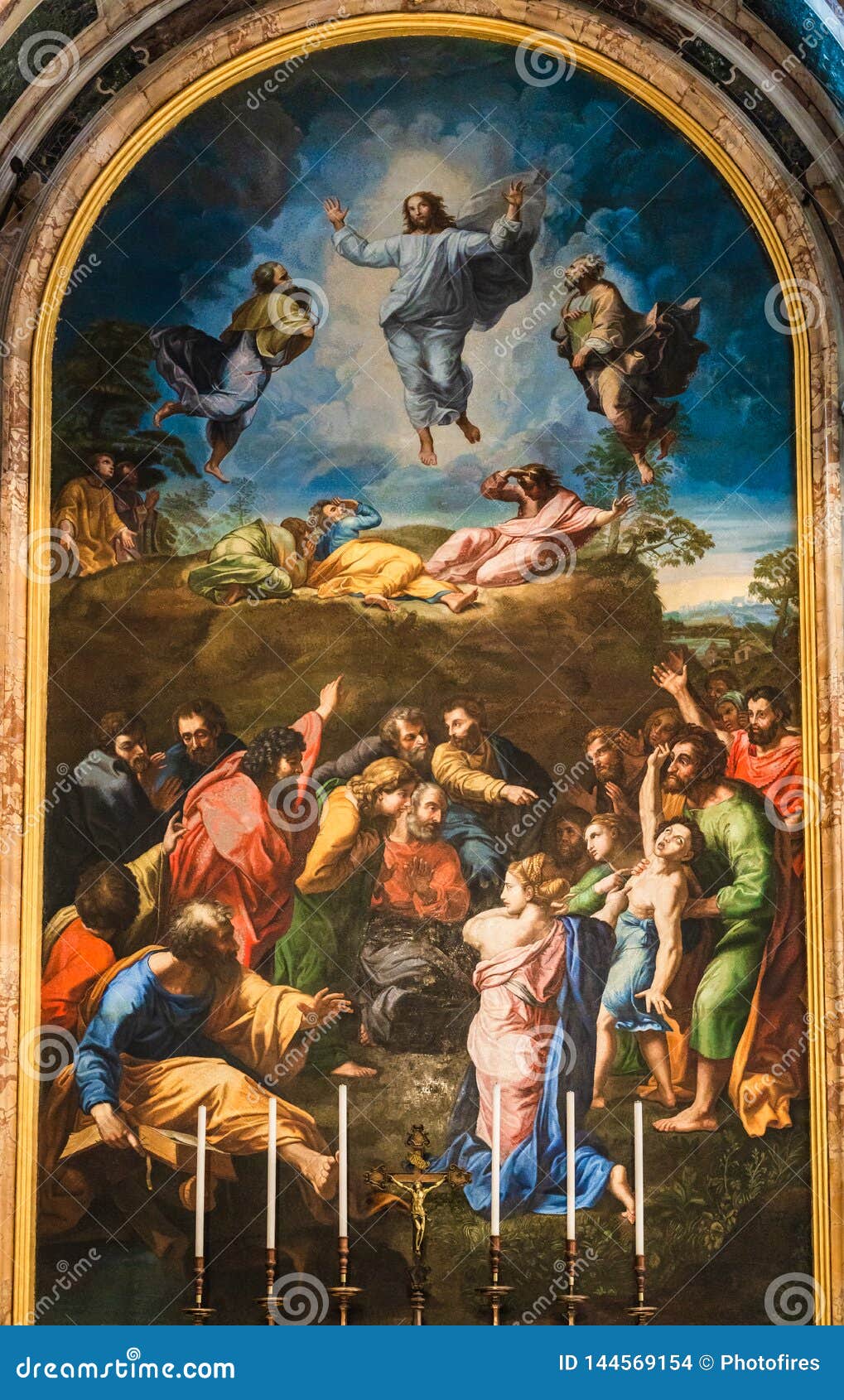
After several years in a rented hall at Grove and Christopher Streets, the cornerstone of the present church was laid on June 10, 1833. The church was designed by John Doran in the Greek Revival style, but it has been extensively renovated over the years. Two fires, one in 1855 and the other in 1885, caused extensive damage to the interior. Renovations after the second fire were supervised by Arthur Crooks. The interior of the church was restored in 1972. At the time, a fresco of the Transfiguration, after Raphael’s original in the Vatican, was discovered under layers of paint and restored. Structural restoration work was performed in 1991–1992.

50 Oldest Churches of NYC: Saint Peter’s Church

When America was a colony under English rule, Catholic worship was prohibited.  Following the Revolutionary War, New York City served as a temporary capital of the newly independent United States.  This prominence brought many foreign ambassadors and businessmen to the city, some of whom were Catholic, including several members of Congress. A small group of city residents began to attend Mass privately at the home of the ambassador of Spain.

The Catholics of New York made a formal request to the Common Council of New York City for a suitable piece of land which the Catholic congregation could lease as the site for its church. The Protestant Corporation of Trinity Church, stated that three lots belonging to “the Farm of Trinity Church”  permitted several leases to be transferred to the trustees of Saint Peter’s Church.

The Catholic congregation eventually leased five lots from Trinity Church at the corner of Barclay and Church streets. The cornerstone was laid on October 5, 1785. In the cornerstone are Spanish coins minted during the reign of King Charles III of Spain.

By the Spring of 1786, with the help of donations such as one thousand silver dollars from King Charles III of Spain, the congregation had collected enough money to begin construction.  On November 4, 1786, a Solemn High Mass was offered in the new church.

 The first pastor needed to know six languages spoken by the eclectic congregation, namely English, French, Dutch (i.e. German), Spanish, Portuguese and Irish.

Saint Peter’s struggled in the beginning, and in 1792, the Corporation of Trinity Church voted to cancel part of the back rent which St Peter’s owed. Three years later, with St Peter’s still in debt, Trinity Church again came to the aid of the struggling parish when it cancelled back rents and transferred ownership of the land to the trustees of St Peter’s for the sum of one thousand pounds.

Despite the large growth of the congregation in the 1830’s, the neighborhood was changing from a residential to a business district. Homes gave way to stores, and stores to tall office buildings. The ethnic background of the parishioners reflected changing patterns of immigration. The  congregation of St. Peter’s, in the 1830s consisted of some 25,000 souls, most of them Irish. The congregation gradually dwindled to 7,000 of twenty nationalities, most of them Polish Ruthenian.”

Then, after the terrorist attacks on the World Trade Center, both St Peter’s and her chapel, St Joseph’s in Battery Park City, were used as staging grounds for rescue and recovery operations. “We were the first place they were bringing all the emergency equipment. Everything was in disarray,” then-pastor Kevin Madigan stated. “Supplies were piled six feet high all over the pews, bandages, gas masks, boots, hoses and cans of food for the workers and the volunteers, many of whom were sleeping in the pews on bedrolls.”  The Church celebrated Masses occasionally, but only for the rescue workers and those few others with credentials to enter the area.

 The world-recognized World Trade Center Cross, a sign of hope for all the world to see in the wreckage of the buildings, was displayed outside St Peter’s on Church Street until it was moved to the 9/11 Memorial. A new custom cross, commissioned to stand in its place, was installed on August 11, 2011 to represent the resurrection of the neighborhood.

50 Oldest Churches of NYC: Saint Peter’s Church

I started sketching churches in New York City largely because I was researching my family’s history in New York. My grandmother Josephine Hickey was baptized at Saint Peter’s Church on September 13, 1891. The Hickey family loved just a few blocks away at 143 Washington Street which is today at the south end of the World Trade Center Memorial site. The building no longer stands.

St Peter’s Church was founded five years before the establishment of the present day United States government. It was the first Roman Catholic parish in New York, established in 1785 on the site it now occupies. The original church was built only two years after the end of the American Revolution. Old St Peter’s Church was used for worship until 1836 when a portion of the ceiling gave way and the parish made plans to build a new and larger place of worship. By this time, the congregation of St Peter’s had grown so large that some of the parishioners who came to hear Mass had to stand outside..

The present church exterior was completed in 1840 and was ultimately declared a landmark by Federal, State and City agencies.


50 Oldest Churches of NYC: Plymouth Church

Plymouth Church of the Pilgrims located at 57 Orange Street between Henry and Hicks Streets in the Brooklyn Heights neighborhood of Brooklyn, New York City was built in 1849–50 and was designed by Joseph C. Wells. It is an example of 19th century urban tabernacle architecture

It has been listed on the National Register of Historic Places since 1961, and has been a National Historic Landmark since 1966. It is part of the Brooklyn Heights Historic District, created by the New York City Landmarks Preservation Commission in 1965.

Under the leadership of its first minister, Henry Ward Beecher, it became the foremost center of anti-slavery sentiment in the mid-19th century. His sister was Harriet Beecher Stowe, noted today as the author of the anti-slavery novel Uncle Tom’s Cabin (1852) that “helped lay the groundwork for the Civil War.

The church itself became an important station on the Underground Railroad through which slaves from the South were secretly transported to Canada. Locally known as “the Grand Central Depot,” slaves were hidden in the tunnel-like basement beneath the church sanctuary.

One recurring event that garnered considerable public attention was Beecher’s mock slave auctions. Beecher would bring slaves into the sanctuary, auction them off to the highest bidder, and then set them free.  The most famous case involved “Pinky“, a 9-year-old slave girl who had escaped from Alabama. On February 5, 1860, in front of a crowd of 3000, Mr. Beecher started the bidding and a collection plate was passed around the congregation. When the plate with $900 and a golden ring reached the pulpit, Beecher picked up the ring and placed it on the finger of Pinky, exclaiming,  “Remember, with this ring I do wed thee to freedom.” Sixty-seven years later, Pinky returned to Plymouth, now a well-educated woman, named Mrs. Rose Ward Hunt, and returned the ring Beecher had given to her.

The church offered Abraham Lincoln $200 to come to Brooklyn and giving a lecture to the congregation. Lincoln accepted the invitation, traveled to Brooklyn and participated in the church service on Sunday, February 26 1859. Today a plaque marks the pew where Lincoln attended the service. Because of high demand, Lincoln’s address was moved to Cooper Union, where a 25 cents admission fee was charged. Lincoln gave his famous anti-slavery speech before a capacity crowd of 1,500 on February 27, 1860, more than eight months before he was elected President.

50 Oldest Churches of NYC: Son Rise

The Son Rise Charismatic Interfaith Church, (2000 Richmond Avenue, Staten Island, New York) formerly the First Asbury Methodist Church was first built in 1849 and was remodeled in 1978. It was designated a landmark of New York City on March 19, 1968.

This Federal Style Church designed by an unknown architect, was initially named after Bishop Francis Asbury, a Methodist preacher who first came to Staten Island in 1771. He was the first two bishops of the Methodist Episcopal Church in the United States. Over 41 years his congregation grew from 500 members to over 200,000 members. He traveled on horseback and by carriage thousands of miles to those living on the frontier.

The First Asbury Methodist Church first known as the North End Church was constructed in 1802 near the site of the present building. It was demolished in 1850. The side walls of the present building are said to date back to 1849. Some headstones in the cemetery date back to 1813. Ichabod Crane is buried there. Johnathan Irving borrowed his name for his short story “The Legend of Sleepy Hollow.”

Crealde Urban Sketching Class

When I discuss sketching people on location during my Crealde Urban Sketching Class, I pose for the students and then ask each student in turn to pose for 5 minutes. 5 minutes is about the most time you might ever be able to sketch someone on location before they walk off or turn their back to you.

The key to sketching people on location is being able to guess how long they will be focused and sty still. Any time I enter a restaurant I look around to see how much food is still on the plates of the people around me. If their cups are full and they are deep in conversation then it is a prime time to try and catch a sketch.

All of my students in this class are amazing and they all sketch very differently from each other. It is possible to tell at a glance which student created which sketch. That is what makes Urban Sketching so interesting.

Everyone is now on board with trying to complete each sketch with watercolor and finalized ink line. Though I often sketch the line work first, it is sometimes nice to just throw down some large puddles of watercolor to define a person’s general share and then refine it later with line work. I did this sketch in the time it took for 4 students to pose. Rather than sketch the model each time, I sketched the model once, and then sketched the students at work around her. I break the cycle of only focusing on what is expected.

50 Oldest Churches of NYC: Portico Place

The 13th Street Presbyterian Church (143 West 13th Street, NYC) is an 1846-1847 Greek Revival Church attributed to Samuel Thomson, in the NYC Greenwich Village Historic District. It was an offshoot of the old Third Free Presbyterian Church located at Houston and Thompson Streets. Seven years after it opened, it burned down in 1855. It was quickly rebuilt, but by April 1902 it burned down again, both times faithfully recreating the original 1840s design.

As immigration changed the neighborhood’s demographics, the church merged with other Presbyterian congregations to remain afloat. In 1910 the name was changed to the Greenwich Presbyterian Church after it merged with the Fourteenth Street Presbyterian Church. Later, it changed again to the Village Presbyterian Church. From 1954-1973 the church’s name was changed to the Village Community Church while shared the space with the Brotherhood Synagogue. But by 1975, the congregation gave up the ghost and disbanded, putting the building up for sale.

A developer purchased the church to turn it into apartments. But the building was located within the newly-designated Greenwich Village Historic District, and the changes necessary to make this elegantly designed ecclesiastical structure suitable for living – such as inserting windows and doors into the intact Greek Revival facade – seemed incompatible with landmark designation. Fervent opposition to the residential conversion plan followed. A plan was eventually devised that allowed the redevelopment of the church to pass landmarks muster and move ahead.

In 1982 the building was converted into condominium apartment units, becoming known as Portico Place. The portico and columns are made of painted wood. This was developed under the landmarks review process in New York. The 15 different apartment configurations range from a 1,200 square foot two-bedroom units to a 2,100 square foot three-bedroom unit. Many are two-story and most have ceilings that soar to 15 feet. To let in more natural light, skylights were added, positioned so as not to be visible from the street. The main colonnaded facade remained unchanged, and a new residential entrance was created on the side.

All windows and doors were inserted only on the sides of the church, where they were scarcely visible, leaving all exterior architectural detailing intact. The church’s wrought iron gate remained. Even its message board– where the schedule of services or Bible quotes would normally appear – is preserved in front on 13th Street, now simply saying “141-143-145” to indicate the addresses of the apartments within. The conversion is so discreet, many assume the building is still a functioning church, and have no idea of the contention which surrounded the change to the building‘s current use.

The Fantastiks: Final Poster design

This is the final poster design I did for The Fantastiks. The show run ended February 26, 2022 at the Orlando Shakespeare Theater.

The Fantastiks featured Broadway legend Davis Gaines as the narrator El Gallo, The show chronicled a timeless coming of age story about the peaks and valleys of young love through breathtaking poetry and subtle theatrical sophistication. In a world of magic and moonlight, a young couple find their way back together, despite everything trying to keep them apart.

The longest-running musical in world history has been refreshed for the new century and is the perfect celebration of theatre and the eternal power of love. Featuring an award winning score including breakout songs like “Try to Remember,” and “Soon It’s Gonna Rain” and many more.

This sheet lit by a glowing moon was achieved after much experimentation with previous sketches for the poster.

My first pass was more of a long shot since the notes asked for two houses separated by a clothes line. I realized that drawing both houses would create a rather horizontal image, so I filled the rest of the poster with the star filled sky. I liked the design but the couple was rather small.

The second design moved in closer to the couple. I felt I needed at least one roof line to support the clothes line. The sheets are rather opaque with the couples silhouettes a light blue. It works but the triangular shape of the roof rally didn’t add anything to the look of the poster. The young boy and girl were both simplified blobs without much detail as well. So I needed to refine their silhouettes some more. Having a huge moon filling the night sky also didn’t seem to be needed. I decided to start slipping it down behind the sheets. The best look was achieved when it was completely hidden behind the sheets along with the couple. I went back to the drawing board.

The next version moved in even closer. The sheets are still opaque and the boy and girl are each hidden behind their own sheet. This multiple sheet idea wasn’t needed. They could hide behind the same sheet. The final image came about as I played with the blending modes in my digital painting program. That is when the magical glow jumped out at me and I accentuated it further. Sometimes a look is achieved through trail and error. I get the obvious out of the way and then massage the magic with each new pass.

I am sorry I missed sketching this production on the stage. Right now I am designing another set of posters and I am lost in the process. reading new scripts and having a blast designing posters for another season.

Speedy Festival

I am dreaming of life before the pandemic. In my New York City apartment I created a hot air balloon themed stained glass window for a transom over my bedroom door. For some reason I have always had a “thing” for hot air balloons. I have been up in a hot air balloon twice in my life. Once was  in Upstate New York before I started working for Walt Disney Feature Animation. The most vivid memory of that flight as quietly floating over a prison with all the inmates in the yard shouting for us to come on down so they could climb aboard for a jail break. I actually produced a whole series of sketches about that flight.

The next flight was many years later with Pam Schwartz. This balloon flew over an elephant retirement refuge, although I didn’t actually spot any elephants. The landing was at Wallaby Ranch which is an amazing spot to experience hang gliding, which Pam and I also experienced.

Between hang gliding and hot air ballooning, I preferred hang gliding since you really feel like a bird. You are rigged into the kite with a cocoon like sleeping bag. You steer by leaning from side to side. A highly trained pilot is strapped in with you. I remember that as I flew over the clouds, the shadow I cast created circular rainbows in the cloud. This would be the magic Icarus experienced before he flew too close to the sun.