50 Oldest Churches of NYC: Church of the Holy Communion (Limelight)

The Church of the Holy Communion at 656–662 Avenue of the Americas (Sixth Avenue) at West 20th Street in the Flatiron District of Manhattan, New York City, was the first church in New York to have free pews. It was also one of the first to have weekly communion services. Its sisterhood of women church works, begun in 1852, opened new fields of church social ministry for women.

The Gothic Revival church building was constructed in 1844–1845 according to a design by Richard Upjohn, and was consecrated in 1846. In 1853 Upjohn completed the Parish House and Rectory on West 20th Street, and in 1854 he built the Sister’s House. The design of the church, which features brownstone blocks chosen for placement at random angles. Upjohn designed the building to resemble a small medieval English parish church.

In 1975 the declining parish merged with those of Calvary Church, on Park Avenue South at East 21st Street, and St. George’s Church, at Stuyvesant Square, and the combined parish of Calvary-St. George’s the Church of the Holy Communion granted a ninety-nine year lease to the Lindisfarne Association. The church became a cultural center in which there were poetry readings, and concerts, as well as lectures on theatre. The Lindisfarne Association, however, was unable to raise the funds to restore this historical landmark, consequently, Lindisfarne moved to Colorado, and returned the church to the Episcopal parish.

The parish subsequently sold the building to Odyssey House, a drug rehabilitation program, in order to meet its fiscal obligations. Odyssey House, in turn, sold the buildings to nightclub entrepreneur Peter Gatien, who opened the New York Limelight club there in 1983. After frequent problems with the police and charges of rampant drug abuse in the club, it was closed, but reopened in 2003 under the name “Avalon”. It closed permanently in 2007.

On May 7, 2010, the building was reopened as a retail mall called the Limelight Marketplace. Conceived by Jack Menashe, who formerly owned SoHo retail store Lounge, James Mansour of Mansour Design, and Melisca Klisanin, Creative Director, the marketplace was a three-story venue consisting of more than 60 small, high-end shops, selling jewelry, clothing, organic goods and other items.

In the fall of 2014, the church was converted to a David Barton Gym. On December 21, 2016, this location as well as all four other David Barton Gym locations in NYC abruptly closed their door for business. In June 2017, it reopened as Limelight Fitness.

The church is a New York City landmark, designated in 1966, and was added to the National Register of Historic Places in 1980. It is located within New York City’s Ladies’ Mile Historic District.

Beauty and the Beast: Poster Evolution

Beauty and the Beast opened at the Orlando Shakes on June 23, 2022. This show isn’t based on the Disney version of the fairy tale but on the original book. In this tale the relationship between the sisters becomes as important as the relationship between the Beast and Beauty.

Written by local play write and actor Brandon Roberts, this show is an interactive joy for the kids in the audience as well as for the kids at heart. The play runs through July 24, 2022.

The first poster design I did for the show was build around showing the rose that is symbolic of the curse of the beast. However this rose is only hinted at in this theater production and I am told it is more of a Disney thematic invention. That idea had to be scrapped.

A second pass at the poster involved showing a mysterious castle in an enchanted forest. In the play, children are invited onto the stage an given fairy wings. As promoted fairies they have control over the inner workings of the castle. Unfortunately the audience members seldom know how to work their magic. It creates charming and delightful moments.

So the second poster idea had a fairy flying through the forest with plenty of pixie dust illuminating the scene. I knew it was a long shot, and it didn’t fly. I liked the blue lighting and yellow illuminated title, but bottom line, I had to figure out how to show Beauty and the Beast in a way that was unique to this production. I watched last year’s production  to get a feel of what I should do for the poster and I can say, you are guaranteed to laugh when you go to this show. The author of the play is one of Rolando’s funniest actors and this production highlights that strength splendidly.

After seeing these two posters I was given photos of past productions and therefor I had an idea of what beauty and the beast looked like in the production. That   mad my job a whole lot easier. I had specifically avoided sketching the beast since his appearance could vary widely. There was a request for some more swirly title treatment, so I had fun getting lost in researching fairy tale style typefaces.

My castle research turned to interiors and the concept developed of showing the beast as a dark silhouette against a light background column of light and beauty would appear a a bright color against the castles darkness. I used the actors from the previous production but they were not re- cast. So I had a last minute request to replace the beauty I had painted with the new actresses. I also did horizontal compositions of each of the posters since most social media use is rather horizontal. This involved giving the art department the ability to isolate sections of each poster and to allow them to create horizontal versions.

50 Oldest Churches of NYC: Trinity Church Interior

Trinity Church is a historic parish church in the Episcopal Diocese of New York, at the intersection of Wall Street and Broadway in the Financial District of Lower Manhattan in New York City.

The current building is the third constructed for Trinity Church, and was designed by Richard Upjohn in the Gothic Revival style. The first Trinity Church building was a single-story rectangular structure facing the Hudson River, which was constructed in 1698 and destroyed in the Great New York City Fire of 1776. The second Trinity Church was built facing Wall Street and was consecrated in 1790. The current church building was erected from 1839 to 1846 and was the tallest building in the United States until 1869, as well as the tallest in New York City until 1890. In 1876–1877 a reredos and altar were erected in memory of William Backhouse Astor Sr., to the designs of architect Frederick Clarke Withers, who extended the rear.

The tower of Trinity Church currently contains 23 bells, the heaviest of which weighs 2,700 pounds. A project to install a new ring of 12 additional change ringing bells was initially proposed in 2001 but put on hold in the aftermath of the September attacks, which took place three blocks north of the church. This project came to fruition in 2006, thanks to funding from the Dill Faulkes Educational Trust. These new bells form the first ring of 12 change-ringing bells ever installed in a church in the United States.

Trinity manages real estate properties with a combined worth of over $6 billion as of 2019. Trinity’s main building is a National Historic Landmark as well as a New York City designated landmark. It is also a contributing property to the Wall Street Historic District, a NRHP district created in 2007.

3 Commercial Plane Crashes a Day

The United States is experiencing the equivalent death rate of 3 commercial plane crashes a day due to COVID-19. Your average commercial aircraft might have about 90 passengers on board. In a horrific crash all 90 might die and that is happening 3 times every day as most wrongly think the pandemic is over.

The pandemic is not over. The virus is till an ongoing challenge. The pandemic is not like a hurricane, or other natural disaster that quickly passes, it is an ongoing war and the end is not yet in sight. How the war ends is unclear.

In January of 2022 over 2 thousand people were dying every day, now hundreds are dying every day. Is that success?  Over 200,000 children have lost parents and care givers due to the virus. Is this  acceptable collateral damage? For those who are done with the pandemic, the answer is a resounding yes!

There is a lot of virus out there right now. Honestly it keeps hitting closer to home, with people I know getting infected. BA4 and BA5 are to blame. These new variants have a heightened immune evasion. Previous infection from the original Omicron variant offers little to no protection against re-infection. Re-infectionss can result in serious infections, hospitalizations, long COVID and deaths. Portugal is experiencing a surge in cases due to BA4 and BA5 and the deaths rates doubled to equal the worst days of the pandemic for them. Will the same happen in America? Only time will tell. Hospitalization have been slowly rising but not spiking like the last surge in January 2022. Israel is also experiencing a surge and they have reported their highest case rates since April 2022. Seriously ill patients in Israel have doubled in the past week.

Complacency and ignorance are our worst enemy. Vaccines are offering less protection against BA4 and BA5. Breakthrough deaths are becoming more common due to waning immunity and the ability of these new variants to evade our immune response. Before the Omicron variants became predominate, vaccinated individuals over the age of 65 were 9 time less likely to die of COVID. Those who were vaccinated and boosted were 20 times less likely to die. In the last 60 days, with BA4 and BA5 predominant, vaccinated people without boosters were only 1.1 times less likely to die. Vaccinated with boosters are only 3 times less likely to die. The odds of survival if infected have substantially dropped.


50 Oldest Churches of NYC: Saint Savior’s Church

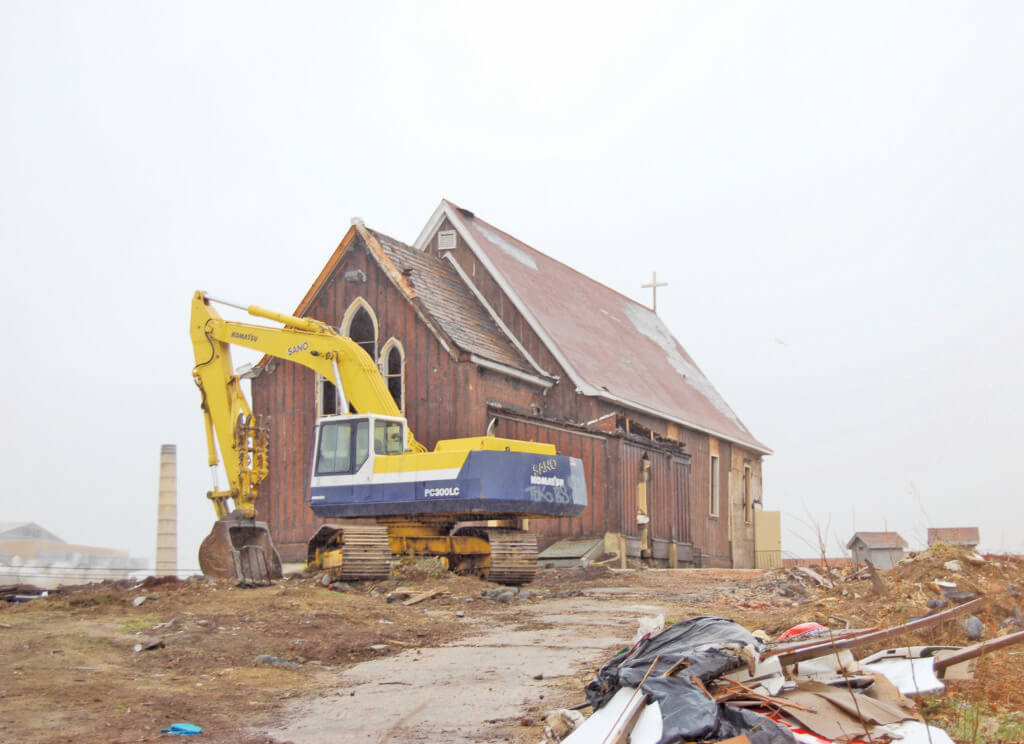
Saint Savior’s Church is on the fringe of an industrial neighborhood, the house of worship stood for more than a century on a tree-lined block at the corner of Rust Street 57th Street Maspeth Queens.

St. Saviour’s Episcopal Church, was one of the oldest and most cherished landmarks of old Maspeth. The church was organized by Judge David Jones, son-in-law of DeWitt Clinton. DeWitt Clinton designed the New York City grid structure. He was joined by other well-known pioneers of Maspeth, including James Maurice, in obtaining the land. The church was erected upon the estate of Dr. Frederick Maurice, for whom the avenue is named.

The Gothic style church, constructed out of redwood, was copied from an old English country church that the Maurice family had seen on their European trip. The building was designed for St. Saviour’s by the architect of Trinity Church, Manhattan, Richard Upjohn, and the cornerstone was laid on Nov. 1, 1847.

During the expansion of the 20th century, Maspeth became increasingly industrialized. The congregation decreased over these years, with so many young people leaving the community. A small, but spirited, nucleus of 57 church members remained. In December of 1970, just three days before Christmas, a fire ravaged the church, destroying much of it and leaving its members numb. Under the leadership of its new rector, the Reverend John M. Mills Sr., St. Saviour’s was rebuilt. The bishop of the diocese rededicated it on April 30, 1972.

The congregation folded in or about 1995 and merged with nearby St. James Episcopal Church in Elmhurst. A Korean church took its place at the former St. Saviour’s site and remained there until selling the church and land a decade later. In January 2006 the church closed for good, and the property was sold to developers. It triggered a long battle between a local civic group, the new property owners, the city and even a local lawmaker as to the sites future.

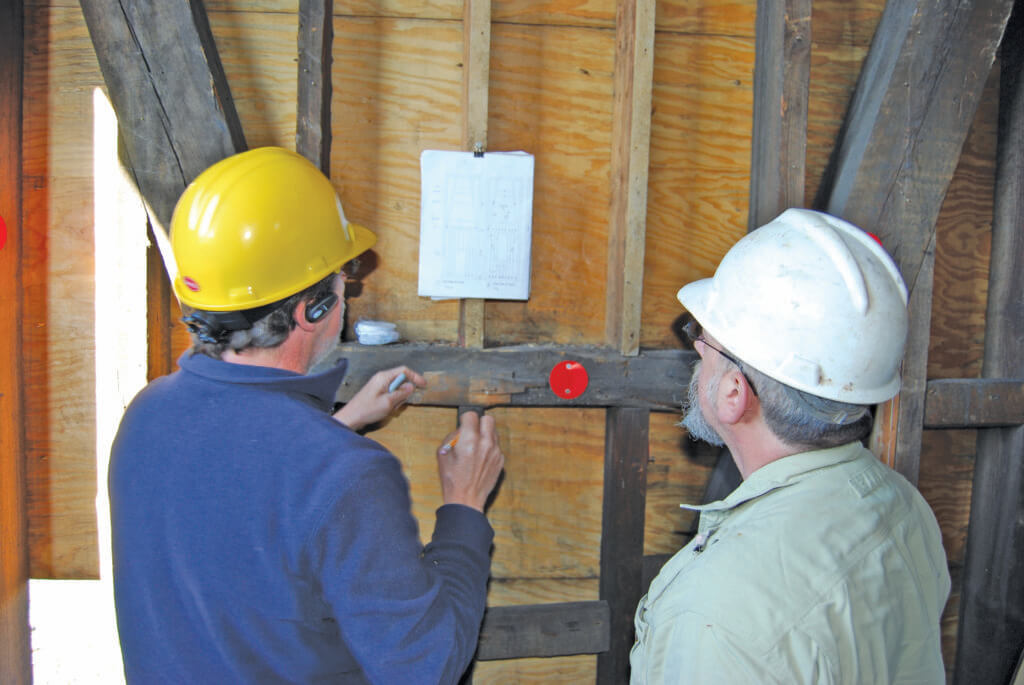
The holding company that purchased the site, known as Maspeth Development LLC, sought to clear the block and develop warehouses. News of their plans stirred interest from the Juniper Park Civic Association, (JPCA) then led by current Councilman Robert Holden, and other preservationists. In the spring of 2008, after a major fundraising effort, the JPCA worked to have St. Saviour’s Church dismantled. piece by piece, frame by frame. It was carefully taken apart like a jigsaw puzzle.

The civic group arranged to have the pieces stored off-site until raising enough funds to rebuild it at another site. The plan was to re-erect the church on an unusable plot of land in All Faiths Cemetery, off the corner of 69th Street and Juniper Valley Road, in Middle Village. Though the group was successful in saving the physical church, the efforts to have the city turn the Maspeth site into a public park fell apart.

To this day, the church remains stored in a warehouse — and its former home is now occupied by warehouses that may be there for many decades to come.

Blind to a Pandemic

A new study showed that at least 75% of the American general population is wrongly convinced that the pandemic is over. Any trip to the supermarket or any other public venue however will show that you will likely see only one or two other people wearing a mask.

Despite this,  over 300 people are dying every day from COVID-19. That is the equivalent of 3 commercial airplane crashes every day but that level of death has become acceptable and easy to  ignore in the United States. It is after all no where near as bad as it was back in January of 2022 when about 1,900 people were dying every day.

Dr. Greg Poland of the Mayo Clinic said, that “America is in a sad situation now.” There are right now over 100,000 KNOWN new cases a day. Since testing is so scarce and since people test at home or do not test at all those numbers are way higher partly because the new BA4 and BA 5 variants are so transmissible. People continue to die from this very preventable disease. The country is falling backwards, as everyone is returning to “life as normal” with no simple safely precautions. Because people are continuing to get re-infected, the virus will continue to mutate.

BA4 and BA5 will infect everyone weather they have been vaccinated or infected in the past. This all could be avoided with basic mitigation measures but people are done caring about their own health or the health of others. Measles is the most contagious virus known to man, and the BA4 and BA5 variants are almost that infectious.


50 Oldest Churches of NYC: Church of the Transfiguration

The Church of the Transfiguration, also known as the Little Church Around the Corner, is located at, 1 East 29th Street, between Madison and Fifth Avenues in the NoMad neighborhood of Manhattan, New York City. The congregation was founded in 1848 by George Hendric Houghton and worshiped in a home at 48 East 29th Street until the church was built and consecrated in 1849.

The church was designed in the early English Neo-Gothic style; the architect has not been identified. The sanctuary is set back from the street behind a garden which creates a facsimile of the English countryside and which has long been an oasis for New Yorkers, who relax in the garden, pray in the chapel, or enjoy free weekday concerts in the main church.

The complex has grown somewhat haphazardly over the years, and for this reason it is sometimes called the “Holy Cucumber Vine”.

The sanctuary had a guildhall, transepts, and a tower added to it in 1852, and the lych-gate, designed by Frederick Clarke Withers, was built in 1896. Chapels were added in 1906 (lady chapel) and 1908 (mortuary chapel). The Edwin Booth memorial stained glass window (1898) is by John LaFarge.

In 1863, during the Civil War Draft Riots, Houghton gave sanctuary to African Americans who were under attack, filling up the church’s sanctuary, schoolroom, library and vestry. When rioters showed up at the church, Houghton turned them away and dispersed them by saying, “You white devils, you! Do you know nothing of the spirit of Christ?”

Actors were among the social outcasts whom Houghton befriended. In 1870, William T. Sabine, the rector of the nearby Church of the Atonement, which is no longer extant, refused to conduct funeral services for an actor named George Holland, suggesting, “I believe there is a little church around the corner where they do that sort of thing.” Joseph Jefferson, a fellow actor who was trying to arrange Holland’s burial, exclaimed, “If that be so, God bless the little church around the corner!” and the church began a longstanding association with the theater.

In 1967, the church was designated a New York City landmark, and it was listed on the National Register of Historic Places in 1973.

50 Oldest Churches of NYC: First Free Congregational Church

The former First Free Congregational Church, 311 Bridge Street, Brooklyn, New York has a simple, rectangular shape and temple front, is one of the few remaining examples of the vernacular Greek Revival building popular in the mid-nineteenth-century. The Greek Revival temple was erected 1846 to 1847.

The “Free” in the name refers to the policy of not charging a rental fee for its pews. The building has changed hands many times, and by 1854 it housed the oldest African American congregation in Brooklyn. Then known as the Bridge Street Church and was the worship space of the African Weslyan Methodist Episcopal  Church which used the basement to hide escaping slaves. It was the first independent black church in Brooklyn.

It is now the student center for the Polytechnic Institute of New York University. The church building is now called the Wunsch Building and houses the school’s Undergraduate Admissions offices. It is used to host many social, cultural, and academic events for the school and community.

It has been designated a historic landmark since November 24, 1981.


50 Oldest Churches of NYC: Beth Hamidrash Hagodol Synagogue

Beth Hamidrash Hagodol Synagogue was the prototypical American synagogue for early immigrant Eastern European Jews, who began entering the United States in large numbers only in the 1870s. They found the synagogues of the German Jewish immigrants who preceded them to be unfamiliar, both religiously and culturally.

The congregation was founded in 1852 and they moved to various various buildings on the Lower East Side before finally settling into the location that would become their permanent home at 60 Norfolk Street. They purchased a Gothic Revival style building, which had once operated as a church for two different Christian denominations, in 1885 for $45,000.

Originally built in 1850 as the Norfolk Street Baptist Church, it was sold to a Methodist congregation in 1860.

This synagogue was a striking example of Gothic Revival architecture and once housed the oldest orthodox congregation of Russian Jews in the United States.  

Rabbi Jacob Joseph, the first and only Chief Rabbi of New York City, led the congregation from 1888 to 1902. Born in Kovno, Lithuania in 1848, he studied in the Volozhin yeshiva where he was known as “Rav Yaakov Charif” because of his sharp mind.

The Lower East Side and New York City preservation communities were desperately working to restore the building to its original splendor, but there was a fire there on Mother’s Day 2017, and the building had to be torn down due to instability.

50 Oldest Churches of NYC: Christ Church and Holy Family

The Christ Church and Holy Family  parish located in the Cobble Hill neighborhood of Brooklyn was organized in 1835, and the church building was completed in 1841-42.

Christ Church was founded on the wave of affluence and confident urban expansion following the opening of the Erie Canal, an economic transformation wrought in both New York City and Brooklyn in the 1830s.

It was designed in the English Gothic Revival style by Richard Upjohn who designed Trinity Church, Wall Street in New York and the gates of Green-Wood Cemetery in Brooklyn. He lived down the street.

The altar, altar railing, reredos, pulpit, lectern and chairs were added in 1917 and were designed by Louis Comfort Tiffany.

The parish holds an annual Saint Francis Festival in October, with Blessing of Animals. The church hosts a number of musical events throughout the year, especially as a part of the Gotham Early Music Society series, and yearly Christmas caroling through Cobble Hill.

The building was destroyed by fire in 1939, and was rebuilt. In recent years, the church has been difficult to maintain, and additionally suffered lightning strikes. The tower began to collapse in 2012, tragically killing a passer-by. The height of the tower was greatly reduced, a large amount of scaffolding was erected, all by order of the NYC Department of Buildings who also ordered that the nave be vacated.